What Editorial looks like
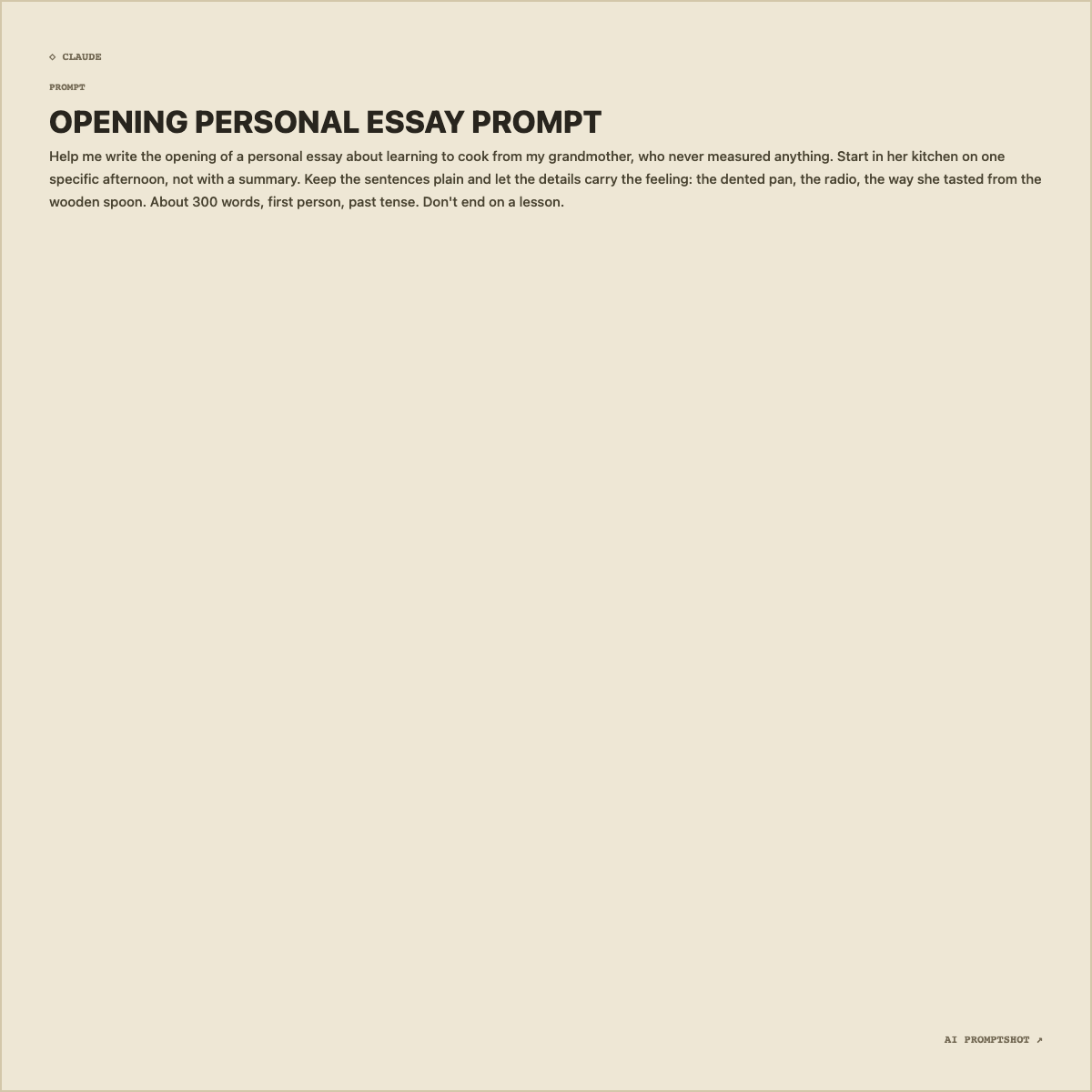
The background is a soft beige (#eee7d5) with a tan border, and the text is a dark brown-black instead of pure black. That takes the glare off and makes a block of prose feel closer to a printed page. The type is the same sans-serif as every other template; the bookish feel comes from the color, not from a serif.
Its Social Square size (1200 × 1200) is the roomiest preset. The example below takes three lines across the top, and in our size matrix this canvas held a 3,366-character stress prompt without cutting a word. The editor only starts shrinking the text once a prompt stops fitting at full size, so on this canvas most prose never gets smaller.
When to pick Editorial
Choose Editorial when the wording is the thing you're sharing: a writing prompt, a teaching example, a carefully phrased system prompt quoted in a newsletter. It suits prompts that set a scene and a tone rather than listing steps.
Notebook uses the same paper palette in a slightly smaller square labeled for Gemini; pick it when the prompt is rough and exploratory rather than finished. For a long prompt organized as a numbered list, Research on a white card is usually clearer.
- long-form prompts
- writing prompts
- teaching prompts
- thought-leadership content
The example prompt
Help me write the opening of a personal essay about learning to cook from my grandmother, who never measured anything. Start in her kitchen on one specific afternoon, not with a summary. Keep the sentences plain and let the details carry the feeling: the dented pan, the radio, the way she tasted from the wooden spoon. About 300 words, first person, past tense. Don't end on a lesson.
Mostly description and constraints, written as prose. On paper it reads like a brief from an editor; the same words on a dark gradient would look like an ad.
Tips for Editorial
- Let the prompt stay prose. This is the one template where long sentences look intentional. You don't have to chop the prompt into bullets for it to read well on this card.
- Leave a blank line between ideas. If the prompt has two parts, say the scene and then the rules, put an empty line between them. The gap carries into the image and gives the reader somewhere to pause.
- Watch the empty half. A sentence or two on a 1200-pixel square leaves a lot of beige underneath. For something that short, Minimal or Clean will look less sparse.